South Asian Engagement with Crash Games Surges Through Evolving Multiplier Strategies and Crypto Incentives

Crash games continue to attract participants across South Asia as platform operators introduce refined multiplier options alongside expanded crypto payment methods and automated cash-out mechanisms. Observers note that these developments have coincided with increased activity on offshore platforms during the first half of 2026, particularly as users seek features that allow precise control over exit points during rapid multiplier climbs.
Platform Updates Drive Feature Adoption
Data from multiple offshore operators indicates that South Asian account registrations rose notably between January and July 2026, with crash game titles accounting for a growing share of session time. Platforms have rolled out enhanced auto-cash tools that permit users to set multiplier thresholds in advance, reducing the need for manual timing during live rounds. Crypto incentives such as deposit bonuses denominated in stablecoins and loyalty rewards tied to transaction volume have appeared alongside these tools, creating layered reward structures that extend play sessions for some participants.
Research conducted by regional analytics groups shows that players in Bangladesh, India, and Pakistan increasingly combine manual multiplier chasing with preset auto-cash parameters. One study released in June 2026 found that sessions utilizing both methods lasted on average 18 percent longer than purely manual approaches, while average returns per session remained consistent with historical benchmarks. These patterns emerge as operators add support for additional cryptocurrencies and refine the granularity of cash-out sliders.
Multiplier Chasing Patterns Among Regional Users
Participants often begin rounds by observing early multiplier trajectories before committing larger stakes, a tactic documented in user behavior logs shared by several platforms. Auto-cash features allow individuals to lock in gains at levels such as 1.8x or 2.5x while leaving a secondary stake active for potential higher multipliers. This dual-stake approach appears frequently in session data from South Asian time zones, where evening peak hours show elevated volumes of such combined strategies.
According to figures compiled by the Asia Pacific Gaming Association, crash game traffic originating from South Asian IP addresses increased by 27 percent year-over-year through mid-2026. The same report highlights that crypto-funded accounts demonstrate higher utilization rates of advanced auto-cash presets compared with traditional payment methods. Operators attribute this difference to the near-instant settlement speeds that crypto networks provide, which align with the fast-paced nature of multiplier rounds.
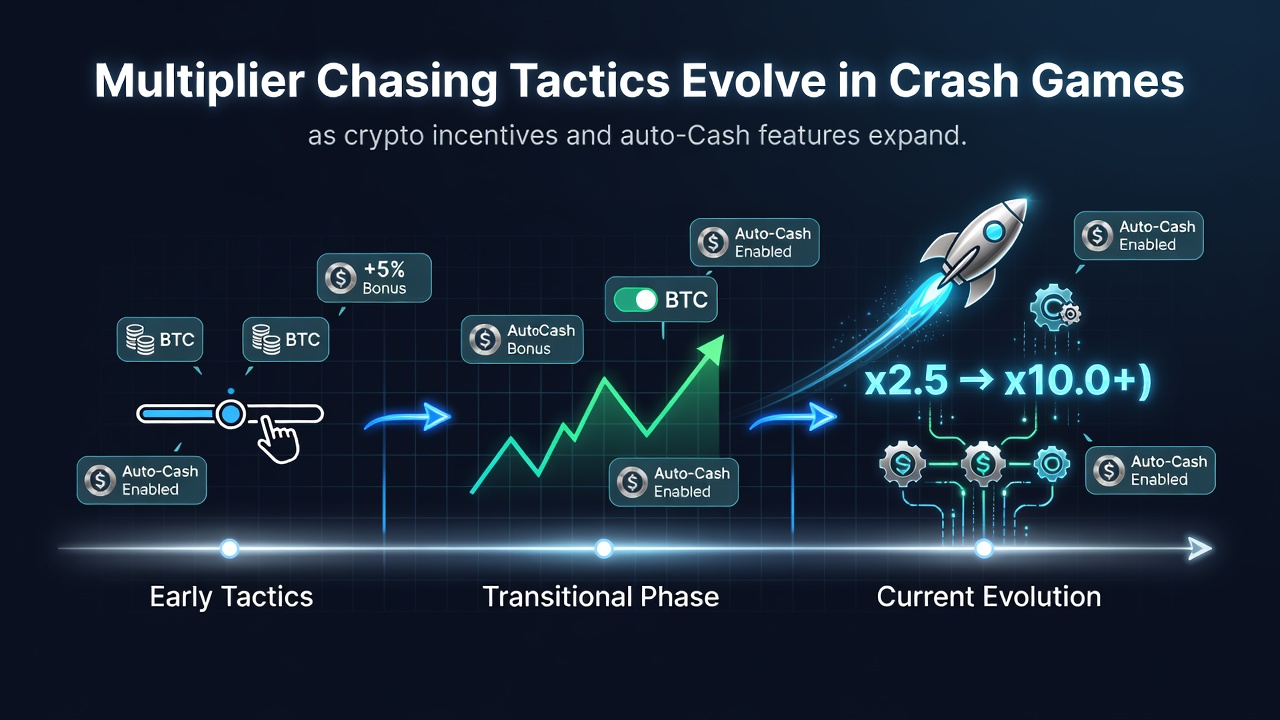
Case examples shared in industry forums describe users who segment their bankrolls into multiple smaller bets within a single round. One documented pattern involves placing an initial stake with an auto-cash trigger at modest multipliers, then allocating remaining funds to a separate entry that continues without a preset exit. Such segmentation allows participants to capture guaranteed small gains while maintaining exposure to larger potential outcomes, a method that has gained traction as platforms introduce more flexible staking interfaces.
Crypto Integration Expands Accessibility
Payment rails supporting USDT, BTC, and emerging regional stablecoins have reduced friction for users in markets where traditional banking options face restrictions. Transaction records indicate that average deposit sizes from South Asian accounts have remained stable even as the frequency of smaller, repeated top-ups has risen. Loyalty programs that award crypto credits based on wager volume further encourage continued engagement with crash titles.
External analysis from the iGaming Association notes that platforms offering instant crypto withdrawals report higher retention rates among users who activate auto-cash functions regularly. The association's 2026 mid-year review also points to expanded educational resources on platforms, including in-app guides that explain multiplier probability distributions and optimal cash-out timing under various volatility settings.
Operators continue to test new incentive structures, such as weekly crypto rakeback calculated on total crash game volume. These programs run parallel to seasonal promotions that tie bonus eligibility to minimum multiplier achievements, creating additional layers of strategic consideration for participants who track both short-term round outcomes and longer-term reward accumulation.
Regulatory Context and Platform Responses
While offshore platforms operate outside direct South Asian regulatory frameworks, operators monitor developments in jurisdictions such as Singapore and Australia for compliance trends. The Australian Gambling Research Centre published findings in May 2026 that examined player behavior in fast-paced digital games, including multiplier formats. Those findings suggest that features allowing predetermined exit points correlate with more consistent session lengths across user cohorts.
Platform operators have responded by refining user interfaces to display historical multiplier data alongside real-time probability indicators. South Asian users have adopted these tools at rates comparable to global averages, according to aggregated telemetry shared during industry webinars held in July 2026. The combination of transparent data displays and automated cash-out options appears to support both cautious and aggressive multiplier approaches within the same user base.
Conclusion
Crash game mechanics continue to evolve through incremental additions of crypto payment support and automated cash-out controls. South Asian participants have integrated these elements into existing multiplier strategies, producing observable shifts in session patterns and feature preferences. Data collected through mid-2026 shows sustained interest in platforms that balance rapid multiplier growth with precise exit tools, while crypto incentives provide supplementary engagement layers. Future platform updates will likely build on these established preferences as operators refine interfaces and reward structures for regional audiences.