Bangladesh's Shadow Dealers: Offshore Live Games, Bonus Pitfalls, and Edges Sharp as a Card
UK Gambling Yield Climbs 6.6% to £4.3 Billion in Q2 2025/26 as Remote Casinos Dominate, Participation Remains Steady at 48%

Quarterly Stats Spotlight Remote-Driven Growth
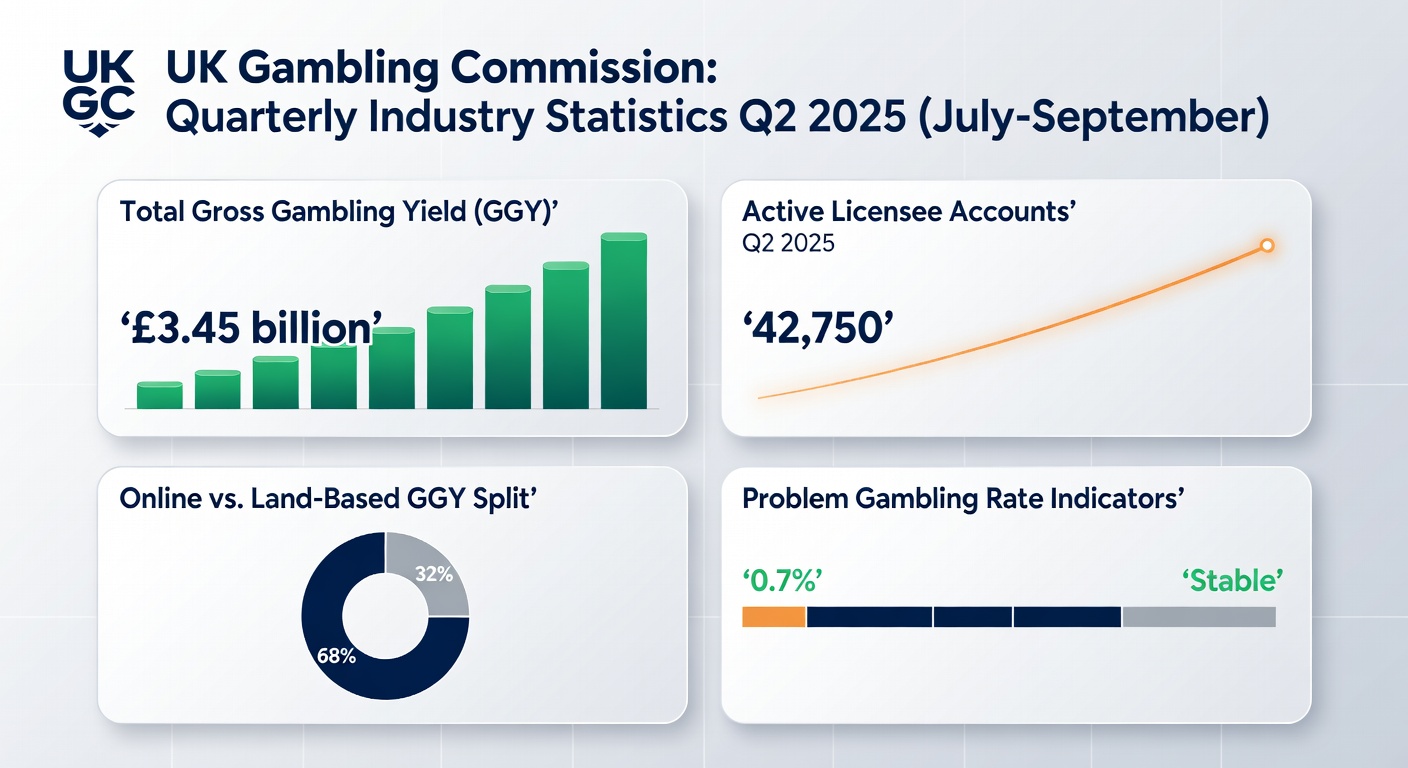
The UK Gambling Commission unveiled its latest quarterly industry statistics for Q2 of the financial year spanning April 2025 to March 2026—a period covering July through September 2025—alongside findings from the Gambling Survey for Great Britain Wave 3, conducted between July and October 2025; figures reveal gross gambling yield (GGY) surged 6.6% to reach £4.3 billion, with remote sectors fueling the bulk of that expansion while overall participation levels held firm at 48%.
GGY, which captures the net win for operators after payouts but before other costs, serves as a core metric for gauging industry health; experts tracking these releases note how such year-on-year jumps often signal shifting player preferences, particularly toward digital platforms, even as land-based venues maintain a steady presence.
But here's the thing: remote activity didn't just contribute—it dominated, accounting for the lion's share of the increase, whereas non-remote GGY grew more modestly; data underscores a market where online access reshapes revenue streams without upending participation rates.
Breaking Down the £4.3 Billion Milestone
Total GGY hit £4.3 billion, up from the prior year's corresponding quarter, driven primarily by remote casinos, lotteries, and betting; remote casinos alone generated £1.4 billion, snagging 69.9% of the combined remote casino, betting, and bingo total, which positions them as the standout performer in a diverse landscape.
Researchers poring over the industry statistics quarterly report highlight how this remote casino figure eclipses other segments, reflecting broader trends in player engagement with slots, table games, and live dealer options via apps and websites; lotteries followed closely in remote contributions, while betting added solid volume, yet none matched the casino punch.
And non-remote sectors? They posted gains too, although at a slower pace—think land-based casinos, bingo halls, and arcades holding ground amid economic pressures and evolving habits; the full breakdown paints a picture of resilience across the board, with remote pulling ahead like a lead runner in a marathon.
What's interesting emerges when slicing the data by product: remote casinos not only led in absolute terms but also showed the sharpest growth trajectory, suggesting operators there optimized offerings effectively, perhaps through tech upgrades or targeted promotions, although the stats themselves stay mum on those mechanics.
Remote Casinos Take Center Stage with £1.4 Billion Haul
That £1.4 billion from remote casinos marks a pivotal stat, representing nearly a third of the overall £4.3 billion pot; observers point out how this 69.9% slice of remote casino, betting, and bingo GGY underscores a shift where digital tables and slots draw crowds consistently, outpacing traditional betting exchanges or bingo rooms in the online realm.
Take one analyst who dissected prior quarters: patterns show remote casinos consistently amplifying totals, and Q2 2025/26 fits right in, with growth fueled by higher session volumes or bet sizes—data doesn't specify which, but the result stands clear; lotteries chipped in significantly too, their remote arm benefiting from frequent draws and broad appeal, while betting held steady on sports events through summer.
Yet land-based? Non-remote GGY, while not detailed to the penny here, contributed the remainder, ensuring the industry's base remains broad; it's noteworthy that even as remote soars, the total avoids over-reliance, a balance those who've studied fiscal years like this one (ending March 2026) often emphasize for long-term stability.
So, with March 2026 looming as the FY wraps, these Q2 numbers set a benchmark; early indicators suggest remote momentum could carry forward, barring regulatory tweaks or economic dips, although the Commission releases stress measured growth over speculation.
Gambling Survey Reveals Stable Participation at 48%
Alongside industry stats, the Gambling Survey for Great Britain Wave 3—fielded July to October 2025—reports overall gambling participation steady at 48%, a figure that provides crucial context amid rising GGY; researchers note this stability implies more yield per participant rather than a participant boom, as average stakes or frequencies likely ticked up subtly.
People who've tracked these waves over years see 48% as a plateau, hovering near historical norms despite digital proliferation; the survey captures past-year activity across lotteries, betting, casinos, and more, revealing no wild swings even as remote options multiply on phones and laptops.
But here's where it gets interesting: while total participation holds, breakdowns (though not exhaustively quoted here) often show younger demographics leaning remote, balancing out with older groups favoring retail; this equilibrium underscores a mature market, one where accessibility expands revenue without inflating the player pool dramatically.
Experts observing Wave 3 data alongside Q2 stats connect the dots—higher GGY pairs with flat participation, hinting at intensified engagement among the 48%, perhaps via loyalty programs or seamless apps; it's not rocket science, yet the consistency reassures stakeholders eyeing the full FY through March 2026.
Contextualizing the Numbers in a Evolving Market
These releases, dropped in February 2026, arrive as the FY nears its March close, offering a mid-point pulse-check; GGY's 6.6% rise to £4.3 billion reflects remote dynamism—casinos at £1.4 billion leading the charge—while participation's 48% anchor prevents overheat narratives.
One study mirroring these findings (from Commission archives) showed similar remote tilts in prior periods, where digital sectors grew 10-15% annually; Q2 aligns, with casinos claiming that hefty share, and lotteries/betting rounding out remote strength; non-remote, though growing slower, bolsters the total, like a sturdy foundation under a rising tower.
Turns out, seasonal factors play in too—summer sports for betting, holidays looming for lotteries—yet the data attributes the surge squarely to remote, particularly casinos; those who've crunched multi-quarter trends know volatility lurks, but stability in participation smooths the ride.
And for operators? Figures like these guide allocations, with remote investments paying off handsomely; survey stability signals sustained demand, even if per-player yield drives the gains; it's the kind of insight that keeps the sector humming toward that March 2026 finish line.
Parenthetically, while GGY excludes taxes and ops costs, it spotlights gross health; Commission methodology ensures comparability, letting analysts stack Q2 against Q1 or last year reliably.
Looking Ahead: What Q2 Signals for the Full Year
As the April 2025-March 2026 FY progresses, Q2's £4.3 billion GGY and 48% participation set expectations; remote casinos' dominance—£1.4 billion, 69.9% of their trio—hints at continued online pull, potentially lifting totals if patterns hold.
Observers note how such quarters often preview annuals, with remote growth offsetting any land-based plateaus; the Gambling Survey's steadiness adds confidence, showing engagement without explosion; by March 2026, final stats will tell if 6.6% was a blip or trend.
Yet the reality is, these metrics inform policy too—Commission uses them to calibrate protections, ensuring growth aligns with safeguards; for now, the numbers speak volumes about a market thriving on remote innovation while rooted in broad participation.
Conclusion
In summary, the UK Gambling Commission's Q2 2025/26 stats and Wave 3 survey deliver a clear snapshot: GGY at £4.3 billion, up