Adapting Auto-Cash Features in Multiplier Games for Evolving Player Protection Standards

Multiplier-driven games have expanded rapidly across digital platforms since the mid-2020s, and operators now adjust auto-cash functions to match updated player protection requirements that took effect in several jurisdictions by July 2026. These adjustments focus on tools that let players set automatic cash-out points at predetermined multipliers, thereby limiting exposure during volatile rounds where values climb or crash without warning.
Regulatory Updates Shaping Game Mechanics
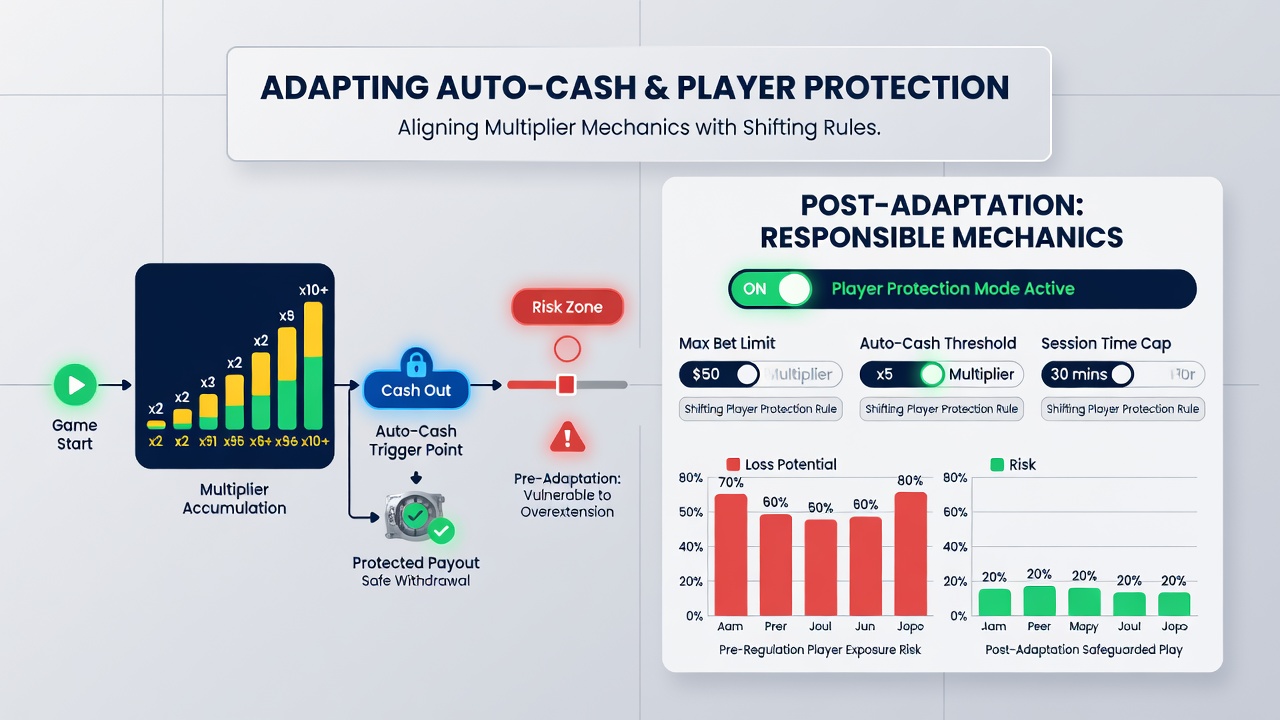
Authorities in multiple regions introduced fresh guidelines that require platforms to integrate configurable auto-cash limits as part of mandatory responsible gaming packages. Data from the National Center for Responsible Gaming shows that sessions using preset cash-out multipliers reduce average loss streaks by measurable margins compared with manual decisions alone. Platforms responded by embedding these features directly into game interfaces so players encounter them before each round begins.
European regulators aligned their consumer protection frameworks with similar principles around the same period, which prompted operators to add session timers that interact with auto-cash settings. When a player reaches a set duration threshold, the system can force a cash-out at the current multiplier or pause further rounds until confirmation occurs. Such integrations appear in both desktop and mobile environments without disrupting core gameplay flow.
Technical Adjustments to Auto-Cash Systems
Developers modified back-end algorithms to support dynamic multiplier caps that adjust based on player history and real-time risk indicators. These changes allow platforms to enforce jurisdiction-specific rules, such as maximum multiplier thresholds that trigger mandatory cash-outs, while still permitting higher-risk options for verified users who meet age and deposit criteria. Research indicates that synchronized updates between front-end displays and server-side logic help maintain consistent enforcement across different regulatory zones.
Additional layers now include optional confirmation prompts that appear when players attempt to raise auto-cash multipliers beyond certain levels. The prompts display projected outcome ranges drawn from historical round data, giving users a brief window to reconsider before confirming the setting. This approach connects directly to broader efforts that link auto-cash tools with deposit and loss-limit trackers already present on most licensed sites.
Implementation Across Global Platforms
Operators serving markets outside traditional regulatory strongholds incorporated similar features to align with emerging standards from bodies such as the Australian Communications and Media Authority. Reports compiled by that agency highlight how auto-cash integration correlates with lower dispute volumes related to rapid multiplier swings. Platforms therefore rolled out region-specific profiles that activate different default settings depending on the player's registered location and verification status.
One documented example involves a platform that introduced tiered auto-cash presets: conservative options for new accounts, moderate defaults for established users, and advanced customization unlocked after sustained play without limit breaches. The system logs each adjustment and feeds the data into compliance dashboards reviewed during periodic audits. Observers note that these logs provide clear trails when regulators request evidence of adherence to protection rules.
Player Interaction and Tool Accessibility
Interface updates placed auto-cash controls within one tap of the main betting panel, which reduces friction while preserving visibility of protection reminders. Text labels now explain each multiplier range in plain language, and color-coded indicators signal when settings approach higher-risk zones. Studies from academic partnerships with gaming research centers demonstrate that clearer labeling leads to more frequent use of the tools rather than default manual play.
Cross-platform synchronization ensures that changes made on mobile carry over to desktop sessions and vice versa. This consistency helps platforms meet requirements that demand uniform application of protection measures regardless of access method. Notifications appear when rules update, prompting players to review current auto-cash configurations before continuing.
Conclusion
Platforms continue refining auto-cash capabilities to satisfy shifting player protection frameworks while preserving the core appeal of multiplier games. Integration of configurable limits, session controls, and compliance logging reflects coordinated responses to regulatory developments observed through July 2026. These adaptations occur alongside broader industry efforts that connect game mechanics with responsible gaming infrastructure across digital environments.